

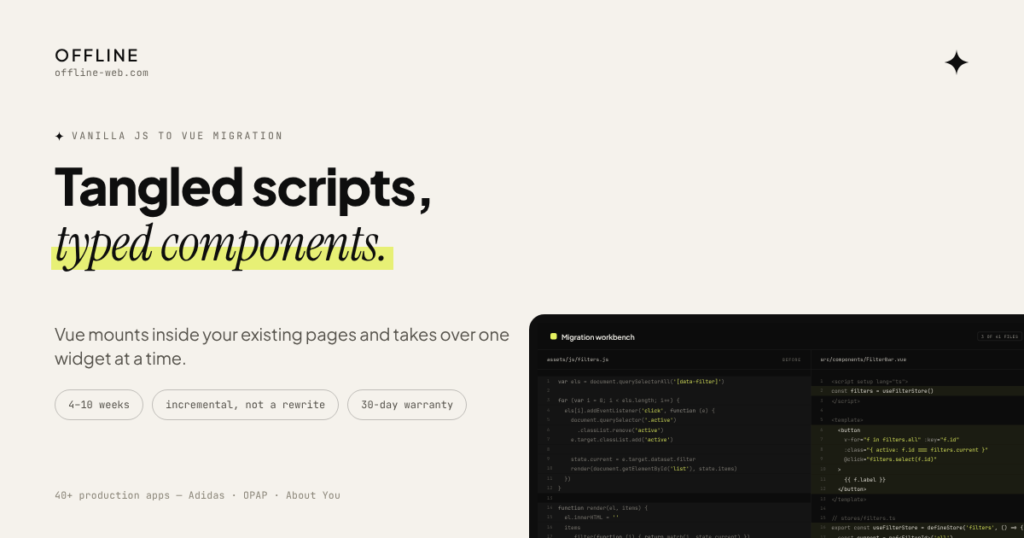
A Vanilla JavaScript codebase does not automatically need a framework. Modernization starts by understanding where the current structure is creating friction and whether a framework would actually simplify the product.
When migration makes sense
As the product grows, shared state, repeated DOM logic and increasingly connected screens can make the code difficult to reason about.
Do you always need a framework?
No. The first decision is not which framework to use. Small, stable parts can remain as they are if replacing them adds no value.
01
Review the existing application
The current structure is reviewed to find where it creates friction and whether a framework would actually simplify the product.
02
Define the new architecture
Code structure, state management and reuse are defined around how the product actually works today.
03
Move functionality gradually
Only the parts that benefit from the new architecture are moved, in stages, while the application stays live.
04
Cleanup and delivery
Remaining legacy code is removed or documented, the result is verified and the work is handed over.
What can be improved
- Code structure
- State management
- Reuse
- Development workflow
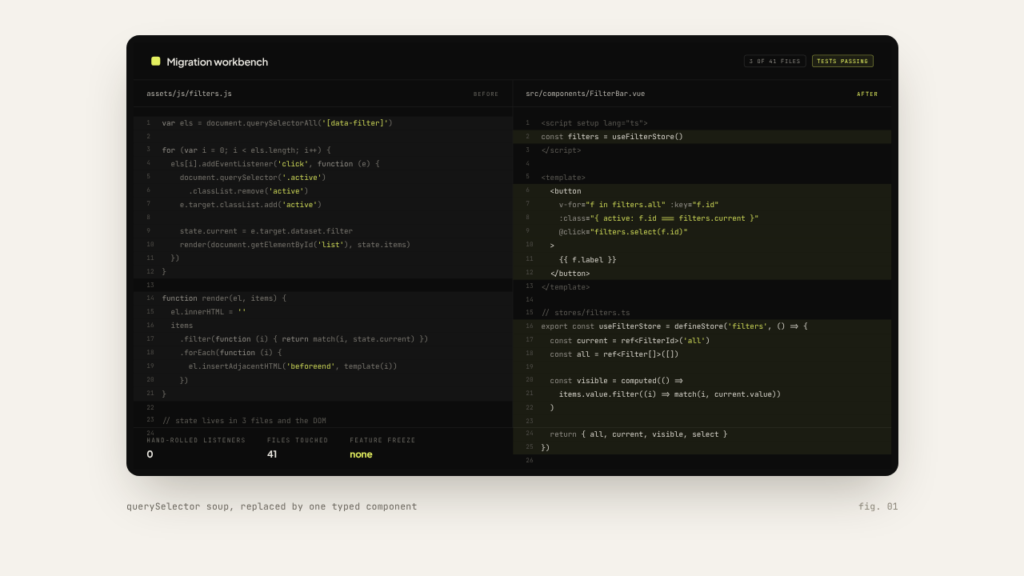
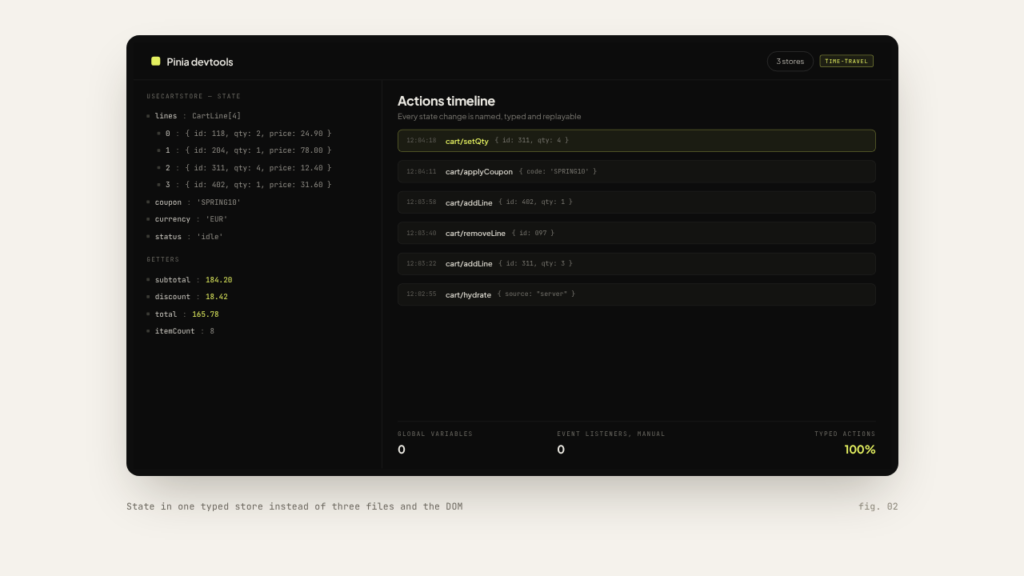
Is it bad for an application to use Vanilla JavaScript?
No. For many applications it is a perfectly suitable choice. Migration only makes sense when the complexity of the project starts to create real limitations.
Does the whole application have to be migrated at once?
Not necessarily. If the existing architecture allows it, the migration can happen gradually.
Should Vue or React be used?
Not before the application has been reviewed. The technology is chosen based on the structure, the requirements and how the project is expected to evolve.
Can part of the existing JavaScript stay as it is?
Yes. Code that is clean, self-contained and still doing its job properly does not necessarily need to be replaced.
Can tests be added during the migration?
Yes. A migration is often a good moment to add tests around the critical functionality and reduce the risk of future changes.
More Services
Get in touch
Athens, Greece, working remotely with EU & US teams
info@offline-web.com
Complete the form with the basic information. You will receive a short questionnaire that takes about 10 minutes, followed by a first estimate of cost and timeline based on your answers.