

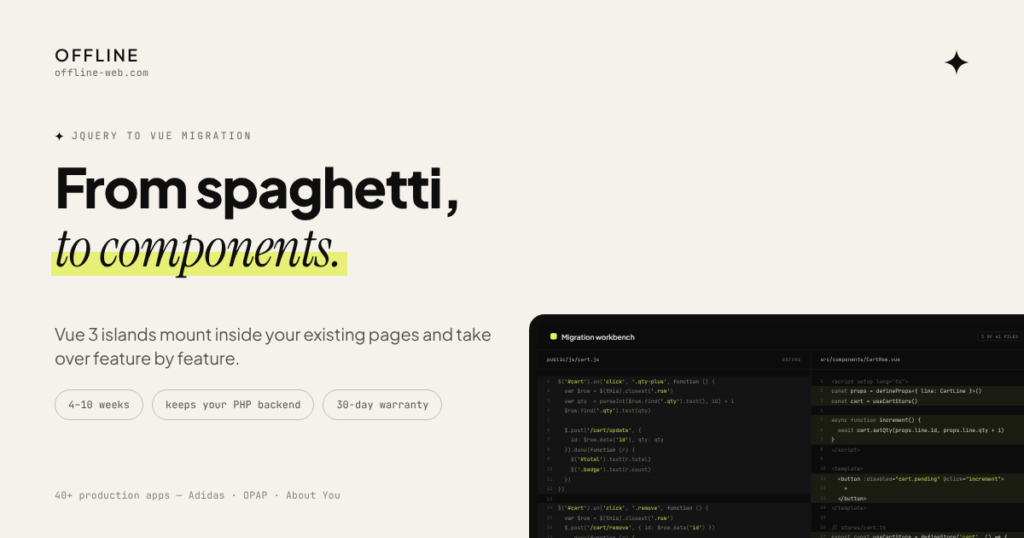
jQuery applications can usually be modernized gradually instead of being rewritten in one step. The first goal is to identify which parts create the most maintenance cost and replace them in a controlled order.
Gradual migration, not necessarily a rewrite
Existing functionality can stay live while new frontend structure is introduced screen by screen or feature by feature.
Which technology should it move to?
Vue, Nuxt, React or another approach can be appropriate depending on the existing system. The framework is a decision, not the starting point.
01
Technical review
The existing application is reviewed first: structure, dependencies and the parts that create the most maintenance cost.
02
Migration plan
The order of replacement is defined so existing functionality stays live while the new structure is introduced.
03
Gradual replacement
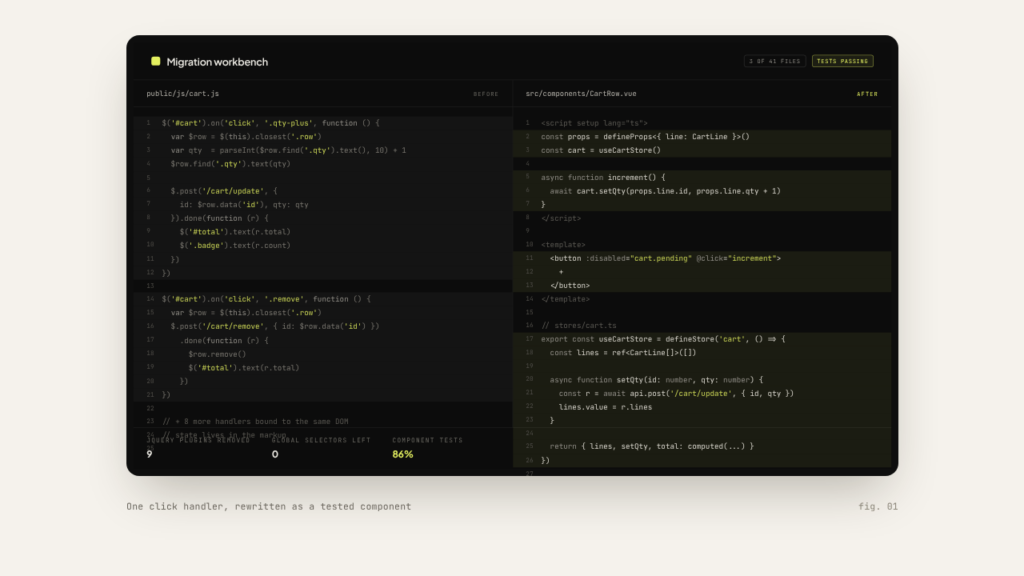
jQuery-heavy components are replaced screen by screen or feature by feature, inside the existing application.
04
Cleanup and delivery
Remaining legacy code is removed or documented, the result is verified and the work is handed over.
What can change
- jQuery-heavy components
- Frontend structure
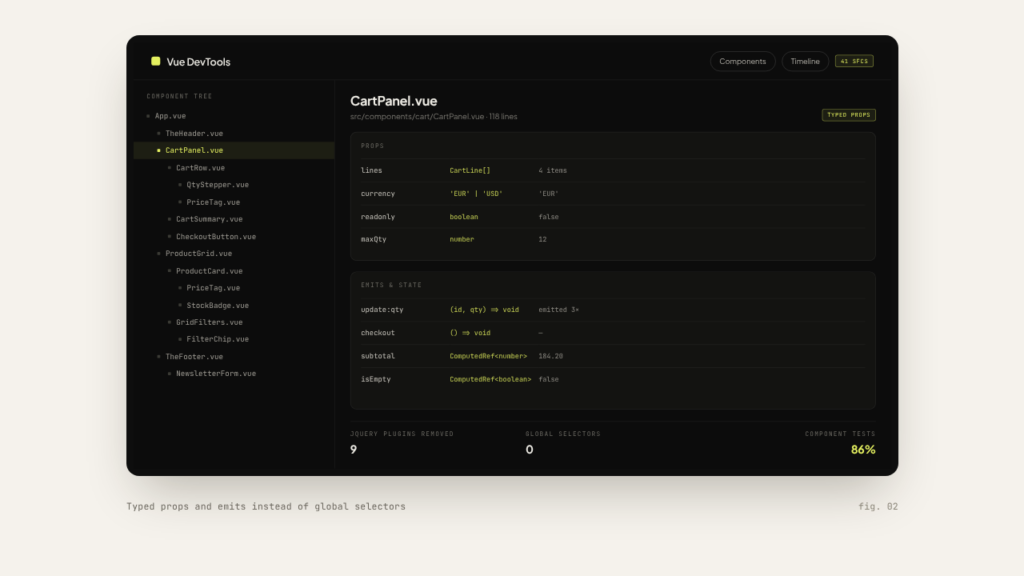
- State and data flow
- Build and development workflow
Does all the jQuery have to go at once?
No. In many applications the transition can happen gradually, replacing different parts in separate stages.
Does the backend have to be rewritten as well?
Not necessarily. If the backend and the existing APIs cover the needs of the application, they can stay as they are.
Should it move to Vue or React?
There is no single right choice for every application. The technology is selected after reviewing the existing architecture, the requirements and how the project is expected to evolve.
Can new features keep being added during the migration?
Yes, as long as the migration plan is organised so the old and the new code can coexist for a period.
Can a redesign happen together with the migration?
Yes. If the interface needs to change, the redesign can be combined with the technical modernization.
More Services
Get in touch
Athens, Greece, working remotely with EU & US teams
info@offline-web.com
Complete the form with the basic information. You will receive a short questionnaire that takes about 10 minutes, followed by a first estimate of cost and timeline based on your answers.