BitValve – Crypto P2P Marketplace Frontend

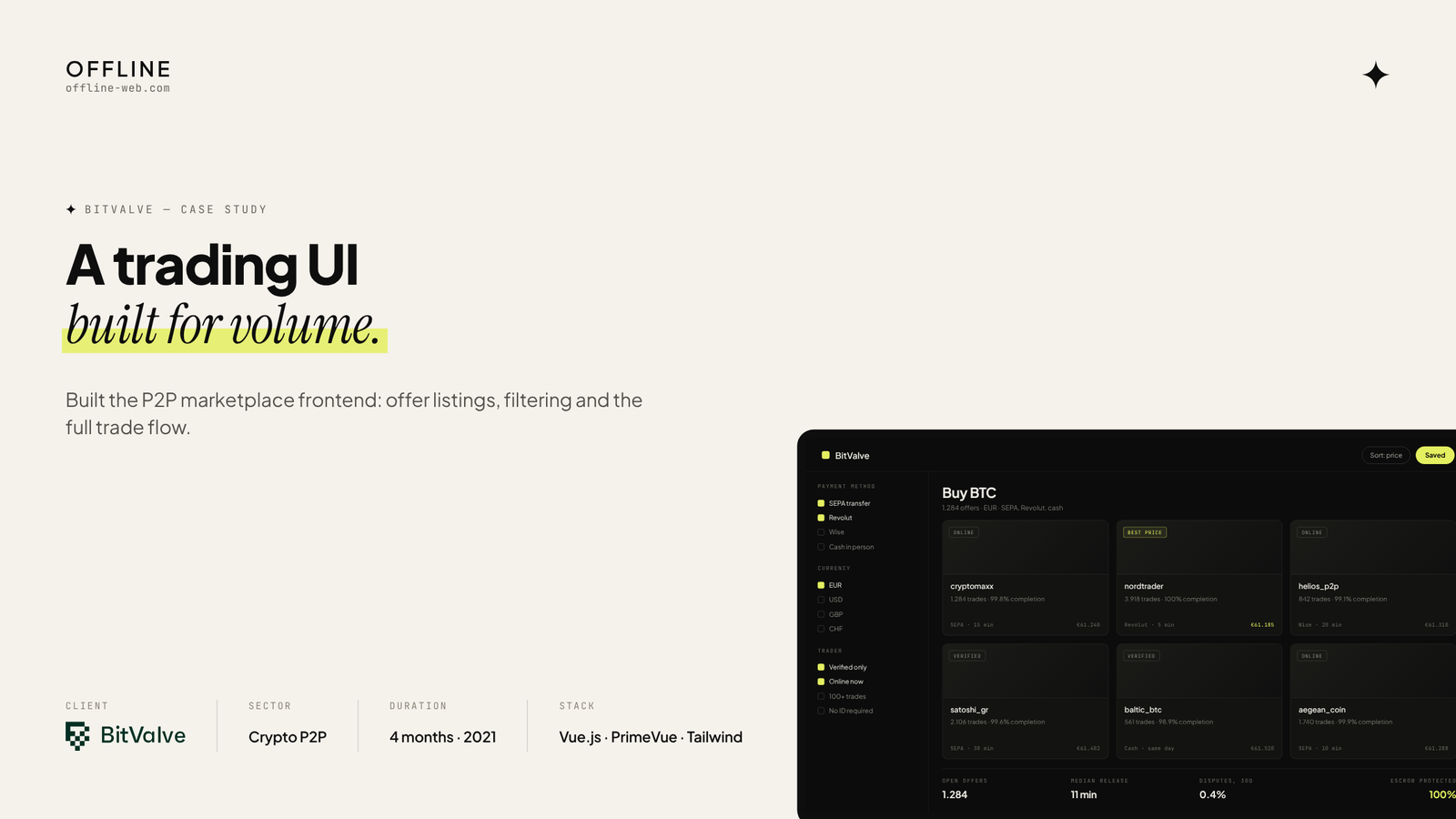
BitValve case study — Built the P2P marketplace frontend: offer listings, filtering and the full trade flow

Client:

BitValve

Date:

2021

Duration:

4 months
BitValve – Crypto P2P Marketplace Frontend
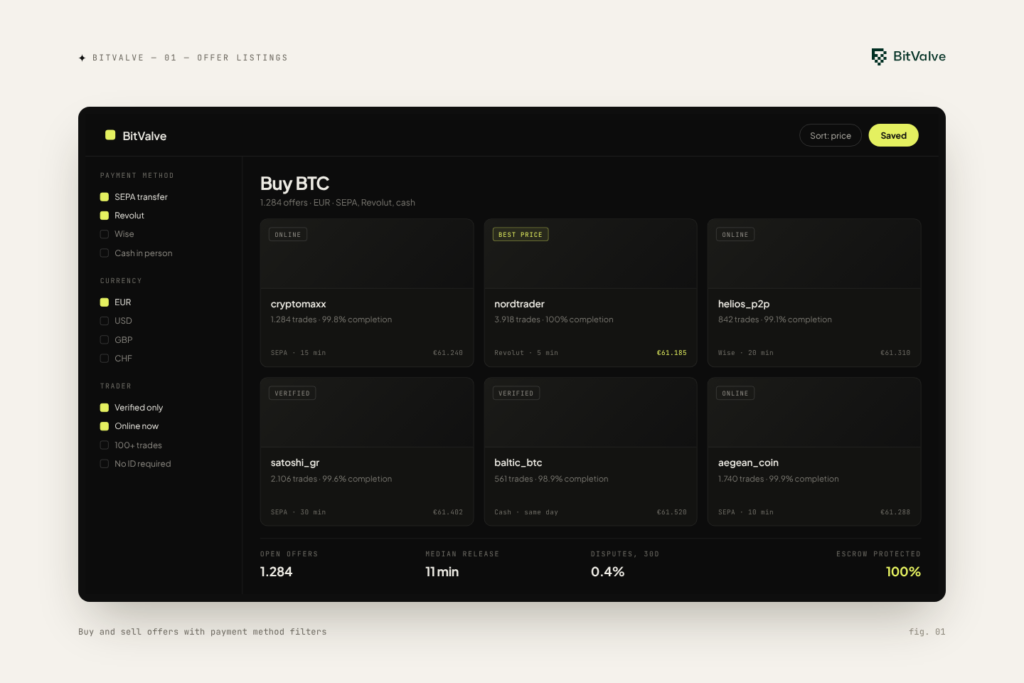
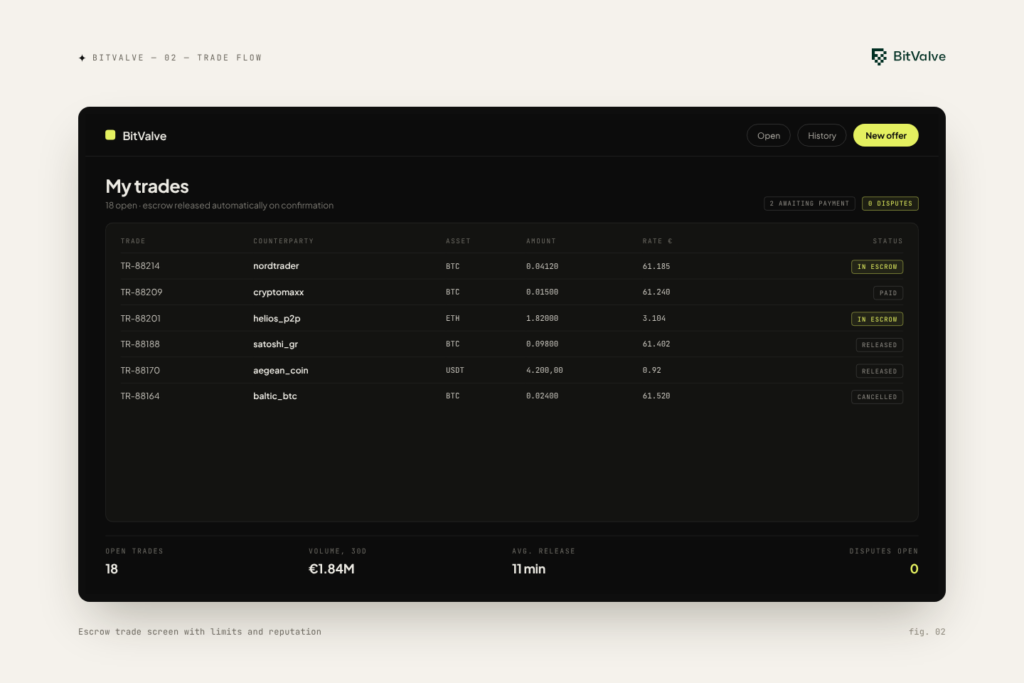
A crypto P2P marketplace frontend modelled on BitValve, with offer listings, multi-dimensional filtering and the trading flows around them. I built the frontend only.

About the client

BitValve is a peer-to-peer crypto marketplace where people buy and sell digital assets directly, across a long list of payment methods. Everything on it depends on users trusting a stranger enough to trade.

Project Overview

This was the frontend layer of a crypto P2P marketplace built along the lines of BitValve: browsing offers, filtering by payment method, currency, country and amount, and moving through the trading screens.The interesting problem is density. A single offer row carries price, limits, accepted payment methods, seller reputation and availability, and a user scans dozens of them looking for the one that fits. Get the hierarchy wrong and the whole list becomes unreadable.Filtering is the other half. Filters have to combine, and results have to update while the user is still thinking, not after. On a list this size that is a frontend architecture question before it is a UI question.No backend on this one. The work was UI architecture, component composition and state handling, built so a real API could be dropped in behind it without a rewrite.

The Challenge

Fintech interfaces carry a lot of UI state. Filters, sorting and pagination all interact, and every combination has an empty case, a loading case and a too-many-results case. Missing one of those is how a marketplace ends up looking broken.There is also a trust dimension that is easy to underestimate. When someone is about to send money to a stranger, a misaligned column or an ambiguous label costs more than it would anywhere else.

My Contribution

I built the entire frontend around a component architecture meant to be reused rather than copied. An established component library covers the tables and filter controls, where writing my own would have been effort spent on a solved problem.Tailwind CSS handles layout and spacing, which is what made it possible to iterate quickly on screens this dense.I structured the UI so that backend integration would be a matter of swapping the data source, not reworking the components.

Technology Stack

  • Vue.js, Tailwind CSS, frontend-only architecture, crypto marketplace UI, complex filtering and listing interfaces
Tags
Categories

Read More

Tell me about your project and get a price, timeline and project scope by email — no call needed.
Like what you see? Let’s work together

    How it works
    1. Tell me about your project below.
    2. I'll email you a few quick questions (about 2 minutes).
    3. You get a price, timeline and project scope by email — no call.
    A link helps me scope your project faster.

    I usually reply within 1 business day with a price, timeline and scope.

    This site is protected by reCAPTCHA and the Google Privacy Policy and Terms of Service apply.