

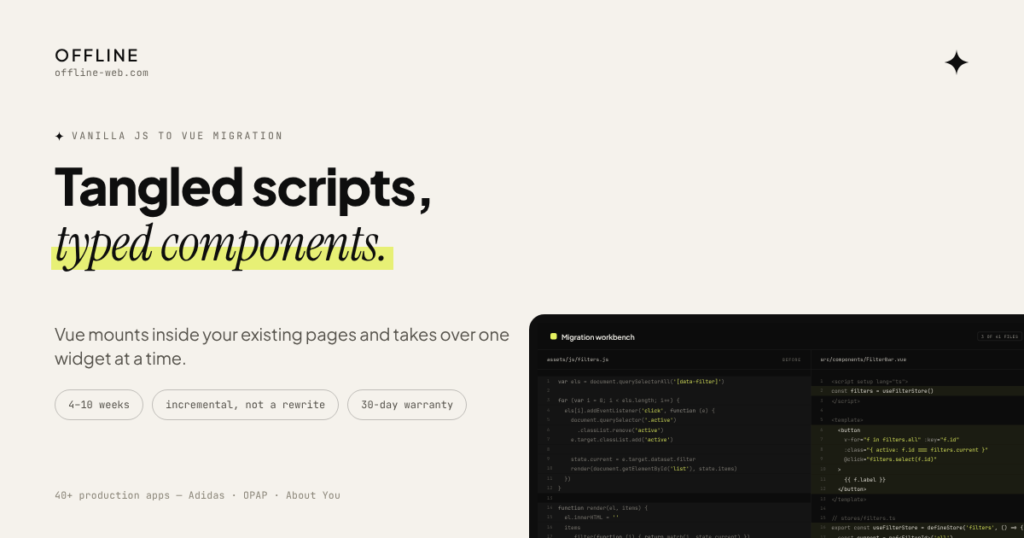
Μια εφαρμογή γραμμένη σε Vanilla JavaScript μπορεί να λειτουργεί σωστά για χρόνια. Όσο όμως μεγαλώνει, η διαχείριση του κώδικα, του state και των αλληλεπιδράσεων μεταξύ διαφορετικών σημείων μπορεί να γίνει πιο δύσκολη.
Όταν αυτό αρχίζει να περιορίζει την ανάπτυξη, η εφαρμογή μπορεί να μεταφερθεί σταδιακά σε πιο οργανωμένη frontend αρχιτεκτονική.
Πότε έχει νόημα η μετάβαση
Η χρήση Vanilla JavaScript δεν αποτελεί από μόνη της λόγο για αλλαγή τεχνολογίας. Αν η εφαρμογή παραμένει απλή και εύκολη στη συντήρηση, δεν υπάρχει λόγος να προστεθεί framework μόνο και μόνο επειδή είναι νεότερο.
Η μετάβαση έχει νόημα όταν η πολυπλοκότητα του project αρχίζει να δυσκολεύει τις αλλαγές, την επαναχρησιμοποίηση λειτουργιών ή την ανάπτυξη νέων features.
Δομή του κώδικα
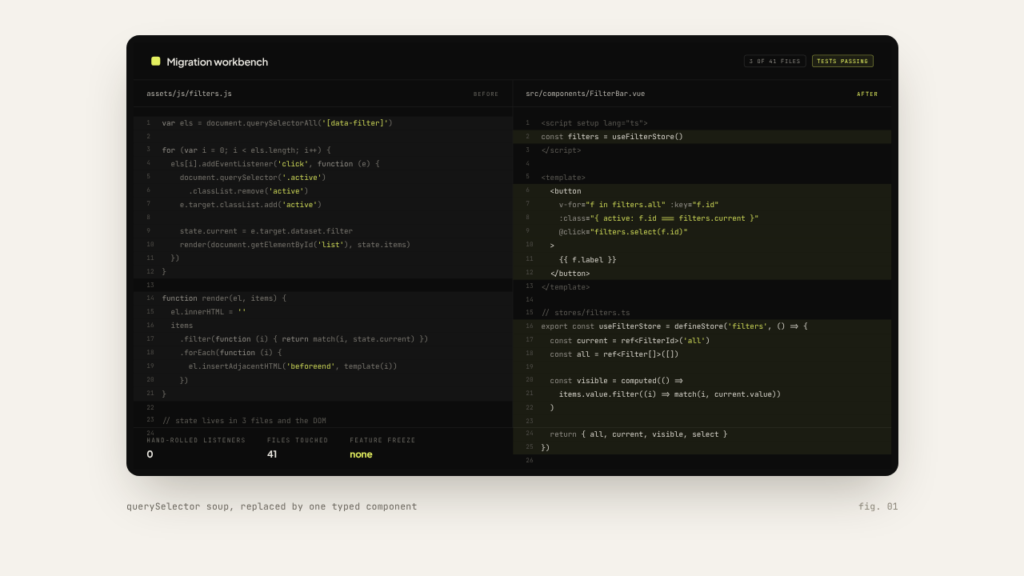
Μεταφορά λειτουργιών σε πιο οργανωμένη component-based αρχιτεκτονική ώστε διαφορετικά μέρη της εφαρμογής να έχουν σαφέστερες ευθύνες.
Διαχείριση state
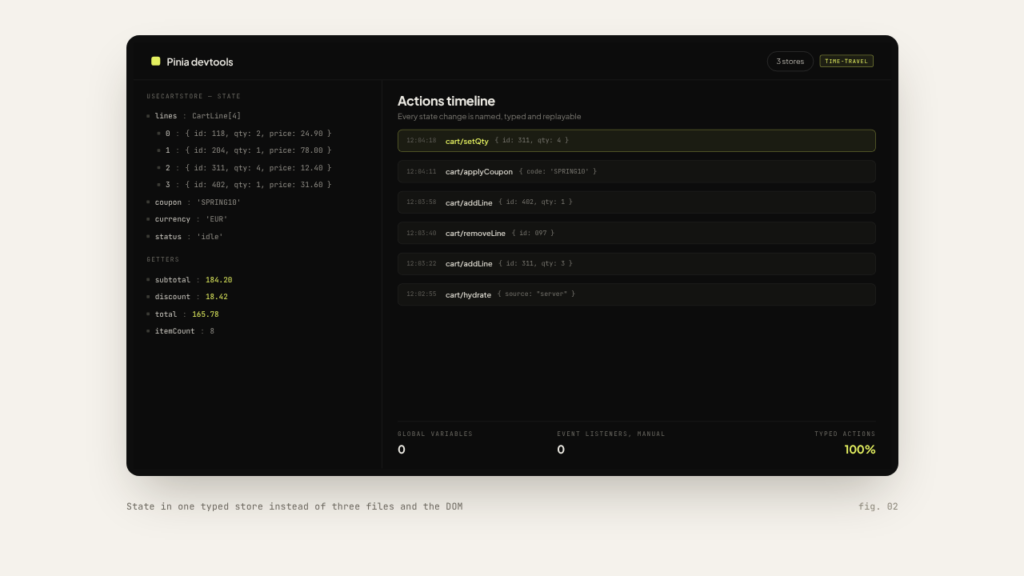
Οργάνωση του τρόπου με τον οποίο μοιράζονται και ενημερώνονται τα δεδομένα όταν η υπάρχουσα λογική έχει γίνει δύσκολη στην παρακολούθηση.
Επαναχρησιμοποίηση
Κοινές λειτουργίες και UI στοιχεία μπορούν να οργανωθούν σε επαναχρησιμοποιήσιμα components αντί να επαναλαμβάνονται σε διαφορετικά σημεία.
Development workflow
Εκσυγχρονισμός του development setup, των dependencies και των εργαλείων που χρησιμοποιούνται για build, testing και ανάπτυξη.
Χρειάζεται πάντα framework;
Όχι. Η πρώτη απόφαση δεν είναι ποιο framework θα χρησιμοποιηθεί, αλλά αν η αλλαγή προσφέρει πραγματικό όφελος στο συγκεκριμένο project.
Όταν η μετάβαση έχει νόημα, μπορεί να επιλεγεί Vue, Nuxt, React ή άλλη λύση ανάλογα με την εφαρμογή και τις απαιτήσεις της.
-
Έλεγχος της υπάρχουσας εφαρμογής
Κατανόηση της δομής του JavaScript, των dependencies, των βασικών λειτουργιών και των σημείων που δημιουργούν δυσκολίες. -
Νέα αρχιτεκτονική
Σχεδιασμός της δομής που θα χρησιμοποιηθεί και καθορισμός των σημείων που πρέπει να μεταφερθούν πρώτα. -
Σταδιακή μεταφορά
Μεταφορά λειτουργιών και UI σε στάδια, με έλεγχο ότι η συμπεριφορά της εφαρμογής παραμένει σωστή. -
Καθαρισμός & παράδοση
Αφαίρεση του κώδικα που έχει αντικατασταθεί, τελικός έλεγχος και παράδοση της νέας έκδοσης.
Είναι κακό να χρησιμοποιεί μια εφαρμογή Vanilla JavaScript;
Όχι. Για πολλές εφαρμογές είναι απολύτως κατάλληλη επιλογή. Η μετάβαση έχει νόημα μόνο όταν η πολυπλοκότητα του project αρχίζει να δημιουργεί πραγματικούς περιορισμούς.
Πρέπει να μεταφερθεί όλη η εφαρμογή ταυτόχρονα;
Όχι απαραίτητα. Αν το επιτρέπει η υπάρχουσα αρχιτεκτονική, η μετάβαση μπορεί να γίνει σταδιακά.
Πρέπει να χρησιμοποιηθεί Vue ή React;
Όχι πριν εξεταστεί η εφαρμογή. Η επιλογή της τεχνολογίας γίνεται με βάση τη δομή, τις απαιτήσεις και τον τρόπο που αναμένεται να εξελιχθεί το project.
Μπορεί να παραμείνει μέρος του υπάρχοντος JavaScript;
Ναι. Κώδικας που είναι καθαρός, ανεξάρτητος και εξακολουθεί να εξυπηρετεί σωστά τη λειτουργία του δεν χρειάζεται απαραίτητα να αντικατασταθεί.
Μπορούν να προστεθούν tests κατά τη μετάβαση;
Ναι. Η μετάβαση είναι συχνά κατάλληλη στιγμή για να προστεθούν tests στις κρίσιμες λειτουργίες και να μειωθεί το ρίσκο μελλοντικών αλλαγών.
Άλλες υπηρεσίες
Επικοινωνία
Αθήνα, συνεργασία εξ αποστάσεως με ομάδες σε Ευρώπη & ΗΠΑ
info@offline-web.com