

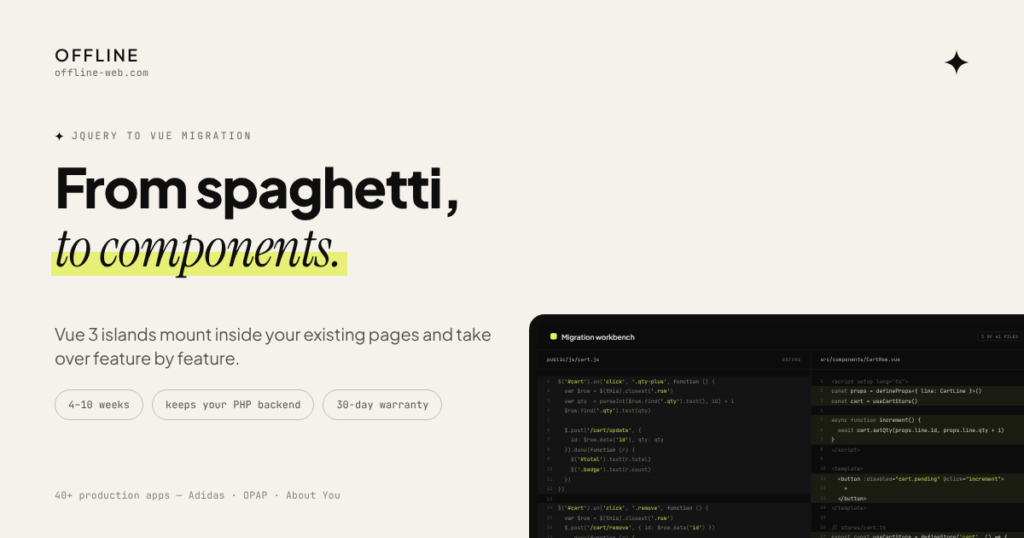
Μια εφαρμογή που βασίζεται σε jQuery μπορεί να συνεχίζει να λειτουργεί, αλλά όσο μεγαλώνει ο κώδικας γίνεται συχνά δυσκολότερο να προστεθούν νέες λειτουργίες ή να γίνουν αλλαγές χωρίς να επηρεαστούν άλλα σημεία.
Η μετάβαση σε σύγχρονο frontend μπορεί να γίνει σταδιακά, χωρίς να χρειάζεται απαραίτητα να ξαναγραφτεί ολόκληρη η εφαρμογή.
Σταδιακή μετάβαση, όχι απαραίτητα rewrite
Πριν ξεκινήσει η μετάβαση, εξετάζονται η υπάρχουσα δομή του frontend, τα σημεία όπου χρησιμοποιείται jQuery, οι εξαρτήσεις και οι λειτουργίες που πρέπει να παραμείνουν διαθέσιμες.
Με βάση αυτόν τον έλεγχο μπορεί να οργανωθεί η μετάβαση σε στάδια, ξεκινώντας από τα σημεία που δημιουργούν τους μεγαλύτερους περιορισμούς.
jQuery components
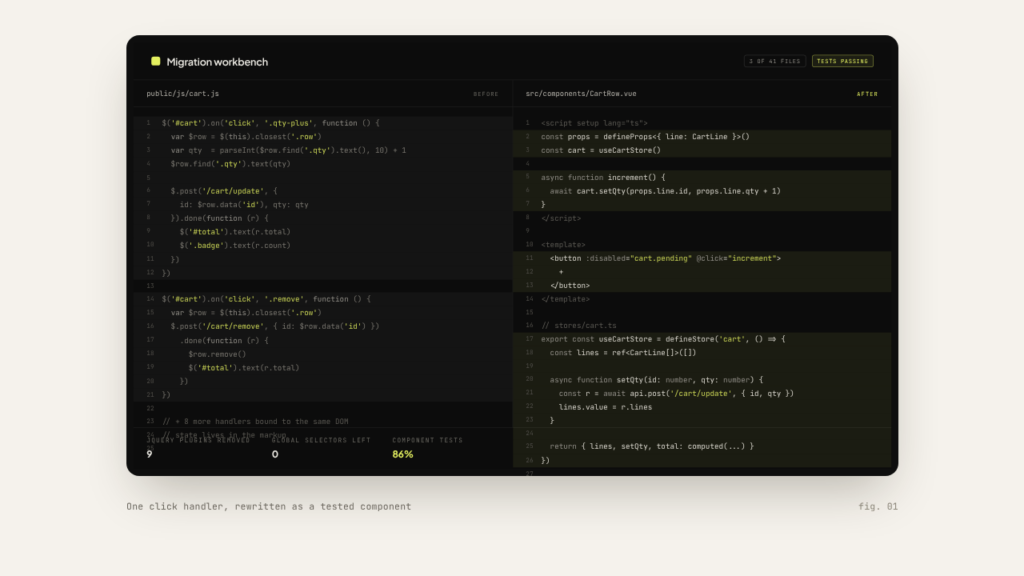
Λειτουργίες και UI components που βασίζονται σε jQuery μπορούν να μεταφερθούν σταδιακά σε σύγχρονα components.
Δομή του frontend
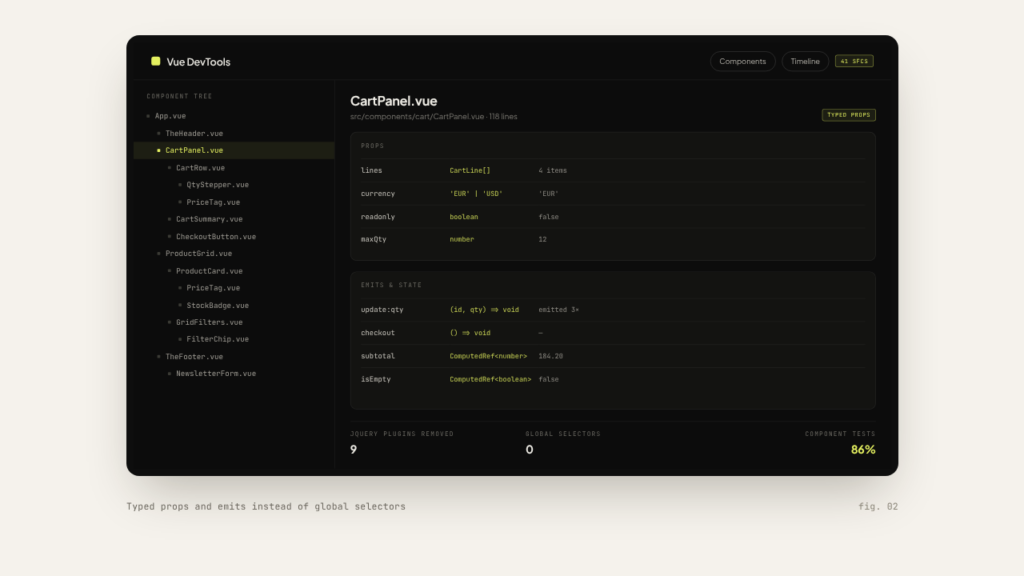
Οργάνωση του κώδικα σε πιο καθαρή αρχιτεκτονική ώστε οι λειτουργίες να μπορούν να συντηρούνται και να εξελίσσονται ευκολότερα.
State και δεδομένα
Βελτίωση του τρόπου με τον οποίο διαχειρίζονται τα δεδομένα και η κατάσταση της εφαρμογής, όταν η υπάρχουσα λογική έχει γίνει δύσκολη στη συντήρηση.
Build & development workflow
Εκσυγχρονισμός του development setup και των dependencies όπου το υπάρχον tooling περιορίζει την ανάπτυξη ή τις αναβαθμίσεις.
Σε ποια τεχνολογία μπορεί να γίνει η μετάβαση;
Η επιλογή δεν γίνεται πριν εξεταστεί η υπάρχουσα εφαρμογή. Ανάλογα με τις απαιτήσεις και την αρχιτεκτονική, η μετάβαση μπορεί να γίνει σε Vue, Nuxt, React ή άλλη κατάλληλη σύγχρονη λύση.
Στόχος δεν είναι απλώς να αντικατασταθεί το jQuery, αλλά η νέα δομή να μπορεί να υποστηρίξει την περαιτέρω ανάπτυξη της εφαρμογής.
-
Τεχνικός έλεγχος
Καταγραφή των σημείων που χρησιμοποιούν jQuery, των dependencies και των βασικών λειτουργιών που επηρεάζονται. -
Πλάνο μετάβασης
Καθορισμός της νέας αρχιτεκτονικής και της σειράς με την οποία μπορούν να αντικατασταθούν τα υπάρχοντα κομμάτια. -
Σταδιακή αντικατάσταση
Μεταφορά λειτουργιών και components σε στάδια, με έλεγχο ότι η υπάρχουσα συμπεριφορά παραμένει σωστή. -
Καθαρισμός & παράδοση
Αφαίρεση του παλιού κώδικα που δεν χρειάζεται πλέον, τελικός έλεγχος και παράδοση της ανανεωμένης εφαρμογής.
Πρέπει να φύγει όλο το jQuery ταυτόχρονα;
Όχι. Σε πολλές εφαρμογές η μετάβαση μπορεί να γίνει σταδιακά, αντικαθιστώντας διαφορετικά σημεία σε ξεχωριστά στάδια.
Χρειάζεται να ξαναγραφτεί και το backend;
Όχι απαραίτητα. Αν το backend και τα υπάρχοντα APIs καλύπτουν τις ανάγκες της εφαρμογής, μπορούν να παραμείνουν χωρίς ουσιαστικές αλλαγές.
Σε Vue ή React πρέπει να γίνει η μετάβαση;
Δεν υπάρχει μία σωστή επιλογή για κάθε εφαρμογή. Η τεχνολογία επιλέγεται αφού εξεταστούν η υπάρχουσα αρχιτεκτονική, οι απαιτήσεις και η μελλοντική εξέλιξη του project.
Μπορούν να συνεχίσουν να προστίθενται νέες λειτουργίες κατά τη μετάβαση;
Ναι, εφόσον το πλάνο μετάβασης οργανωθεί ώστε ο παλιός και ο νέος κώδικας να μπορούν να συνυπάρχουν για ένα διάστημα.
Μπορεί να γίνει και redesign μαζί με τη μετάβαση;
Ναι. Αν υπάρχει ανάγκη αλλαγής του interface, το redesign μπορεί να συνδυαστεί με τον τεχνικό εκσυγχρονισμό.
Άλλες υπηρεσίες
Επικοινωνία
Αθήνα, συνεργασία εξ αποστάσεως με ομάδες σε Ευρώπη & ΗΠΑ
info@offline-web.com